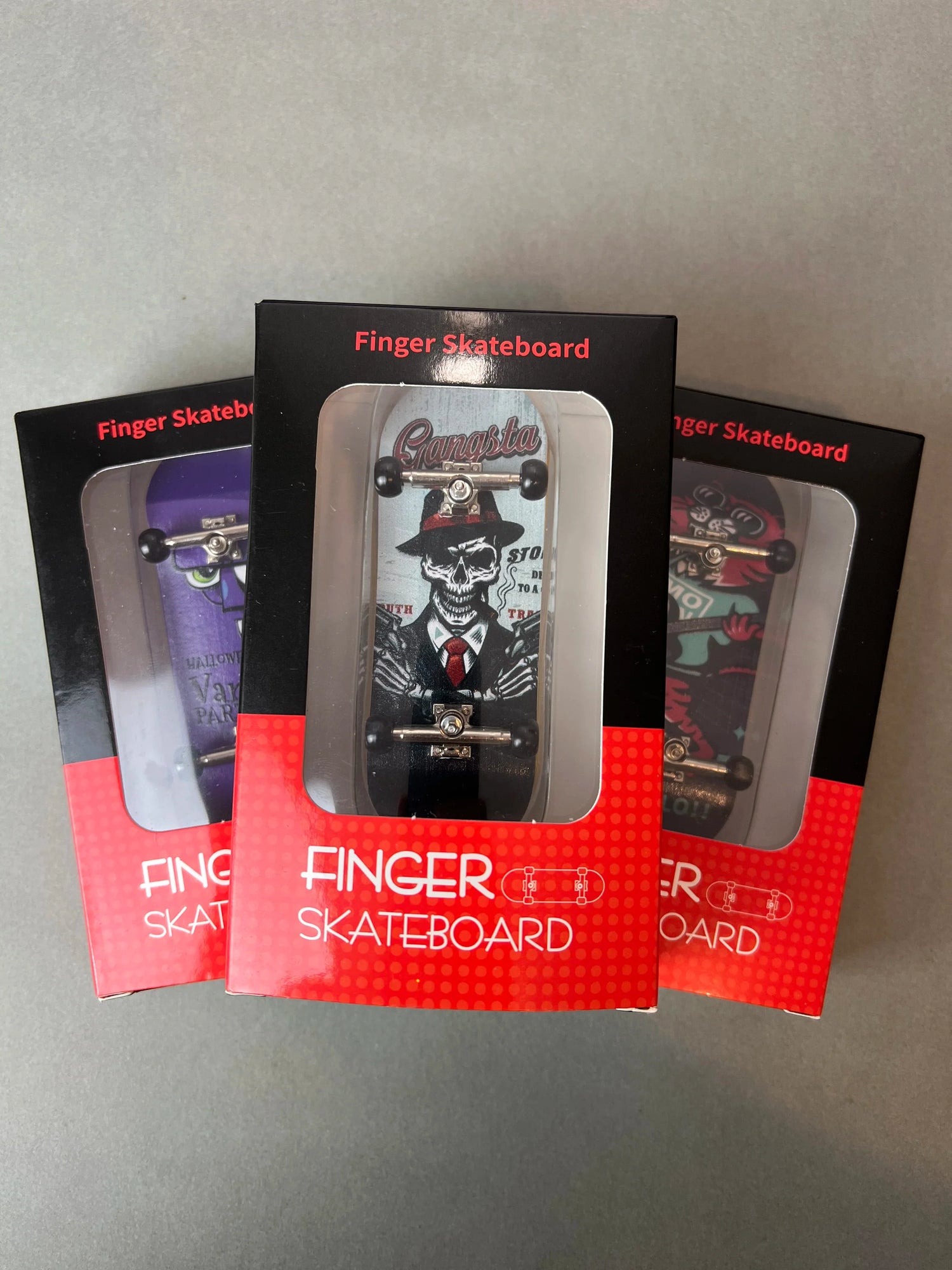

Tech Deck vs. Professional Fingerboard: Differences and Which One to Choose
The first time you heard "fingerboard," you probably pictured a Tech Deck. Makes sense — they're everywhere, from toy shops to bargain bins across Spain. Small, plastic, with your favorite skater's logo printed on the grip tape… and a mountain of limitations the moment you try anything beyond a weak ollie.
The problem is that "Tech Deck" and "professional fingerboard" get used as if they were the same thing, and they're really not. One is a collectible toy. The other is a tool built for pulling off real tricks, made with materials that hold up to actual use and a feel under your fingers that's on a completely different level.
If you're about to buy one — or gift one — and you're not sure what the difference actually is, here it is without unnecessary technical jargon, so you know exactly what you're spending your money on.

Table of Contents
- What a Tech Deck Is
- What a Professional Fingerboard Is
- Comparison Table
- Can You Do the Same Tricks?
- Which One Should You Choose?
- Price: Is It Worth Paying More?
- FAQ
What a Tech Deck Is (and Why It's Not the Same as a Professional Fingerboard)
Tech Deck is, first and foremost, a toy brand. They're mass-produced in plastic and sold in blister packs alongside hundreds of models featuring licensed graphics from real skate brands. It's the entry point for a lot of people into the hobby, and there's nothing wrong with that — as a first taste, it does the job.
The problem is that's where it stays. The trucks are usually fixed or barely adjustable, so they turn poorly or not at all. The wheels are hard plastic with no real bearings, so they don't roll smoothly. And the deck doesn't flex or have any real "pop" (the snap that lets you land a clean ollie) — it's a rigid piece that mimics a board without behaving like one.
For collecting, for a kid just getting curious, or as a desk trinket, a Tech Deck works fine. For actually progressing with real tricks, it falls short fast.
What a Professional Fingerboard Is
A professional fingerboard is, essentially, a scale-model skateboard: same materials, same build logic, same behavior under your fingers as a real board under your feet.
Materials and Construction
The deck is built from thin layers of pressed wood (usually maple), just like a real skateboard. That's what gives it genuine flex and pop: when you do an ollie, the board actually responds instead of just being lifted by your fingers. On top, it has grip — fine grit tape or foam, depending on the model — so your fingers don't slip mid-trick.
Trucks, Wheels, and Bearings
The trucks are metal, with an adjustable kingpin and bushings, just like on a real board: you can tighten or loosen them to turn more or less depending on your style. The wheels have real mini bearings, so they roll smoothly and with control instead of stuttering. That combination is what makes grinds, manuals, and full lines possible with real precision — not just a one-off flip.

Comparison Table: Tech Deck vs. Professional Fingerboard
| Feature | Tech Deck | Professional Fingerboard |
|---|---|---|
| Deck material | Rigid plastic | Maple wood layers, real flex |
| Trucks | Fixed or barely adjustable | Metal, adjustable (kingpin + bushings) |
| Wheels | Plastic, no bearings | Urethane with mini bearings |
| Grip | Printed flat sticker | Real fine grit tape or textured foam |
| Trick feel | Rigid, unrealistic | Responds like a real board, in miniature |
| Durability | Wears out fast with heavy use | Built for daily use and demanding tricks |
| Customization | Basically none | Swap wheels, trucks, grip independently |
| Average price | €8-12 | €25-35 |
| Who it's for | Collecting, first taste, young kids | Real progression, technical tricks, serious hobby |
Can You Do the Same Tricks?
At a basic level, yes: with a Tech Deck you can try an ollie or a simple kickflip. The problem shows up the moment you want to go further. Without adjustable trucks or wheels that roll properly, grinds feel fake, manuals get out of control, and stringing together a full line (several tricks in a row, like any real skater does) is nearly impossible.
With a professional fingerboard, that ceiling disappears. You can tune the trucks to your liking, chain tricks together with the same logic as a real board, and actually progress: from a clean ollie to a kickflip, then to a controlled grind, and so on. It's the difference between "simulating" skateboarding and actually practicing it, even if it's with your fingers.
Which One Should You Choose (Based on Who's Using It)?
Young kids (up to 8-9 years old) just getting curious: a Tech Deck can work as a first taste, especially if their interest is still uncertain.
Preteens and teens who already skate or want to actually progress: go straight for a professional fingerboard. A Tech Deck will feel limiting within weeks.
Adults, collectors, or anyone looking for a desk hobby: no question, professional fingerboard. It's the one that actually hooks you long-term and makes sense as an object with real style, not a passing toy.
If it's a gift and you don't know the person's skill level: a well-chosen professional fingerboard almost always lands well. It doesn't feel outdated in a week, it comes with designs that have real character (not a generic licensed graphic), and it shows you put more thought into the gift than a trip to the toy aisle.

Price: Is It Worth Paying More for a Pro Board?
A Tech Deck costs between €8 and €12. A professional fingerboard, like the ones in our 34mm Pro collection, runs around €33. At first glance, it looks like you're paying almost triple for "the same thing." You're not.
The real math isn't price per unit, it's price per use. A Tech Deck becomes obsolete (or breaks) fast if you use it hard, and buying two or three to replace it already matches or beats the price of one professional board. A well-made fingerboard holds up for months or years, lets you replace only the part that wears out (wheels, grip) instead of tossing the whole thing, and gives you an experience that genuinely feels like skating. That's where the quality difference really shows.
Frequently Asked Questions
Do Tech Decks and professional fingerboards use the same wheel size?
No. Tech Decks have their own factory measurements, while professional fingerboards are usually built in standard sizes like 30mm or 34mm, designed to work with replacement trucks and wheels from other brands in the space.
Can I put professional fingerboard wheels on a Tech Deck?
Generally no — the axles and mounting system are different. That's why, if you want to upgrade your setup over time, it's more worthwhile to start directly with a professional fingerboard.
At what age does it make sense to buy a professional fingerboard?
There's no strict minimum age, but it tends to work better from around 9-10 years old, when there's a bit more fine motor skill to take advantage of truck tuning and precision control.
Do professional fingerboards break as easily as Tech Decks?
No. Being built with real wood layers and metal components, they hold up much better to daily use and the impacts that come with practicing tricks.
Where can I buy a professional fingerboard in Spain?
At Finger3Flip you'll get shipping from Spain to all of Europe and Latin America, with in-house designs and both 30mm and 34mm ranges.
The Bottom Line
A Tech Deck is a collectible toy: fine for getting started or as a desk trinket, but it falls short the moment you want to do real tricks. A professional fingerboard is a real tool, with materials and adjustments that honestly mimic what skating actually feels like, and it's the option that genuinely hooks you long-term.
If after reading this you're ready to make the jump to something professional, check out our Pro fingerboard collection — in-house designs, backed by over 50 real reviews from people who already made the switch. And if you're still unsure which model or size to pick, our guide to choosing your first fingerboard walks you through it step by step.