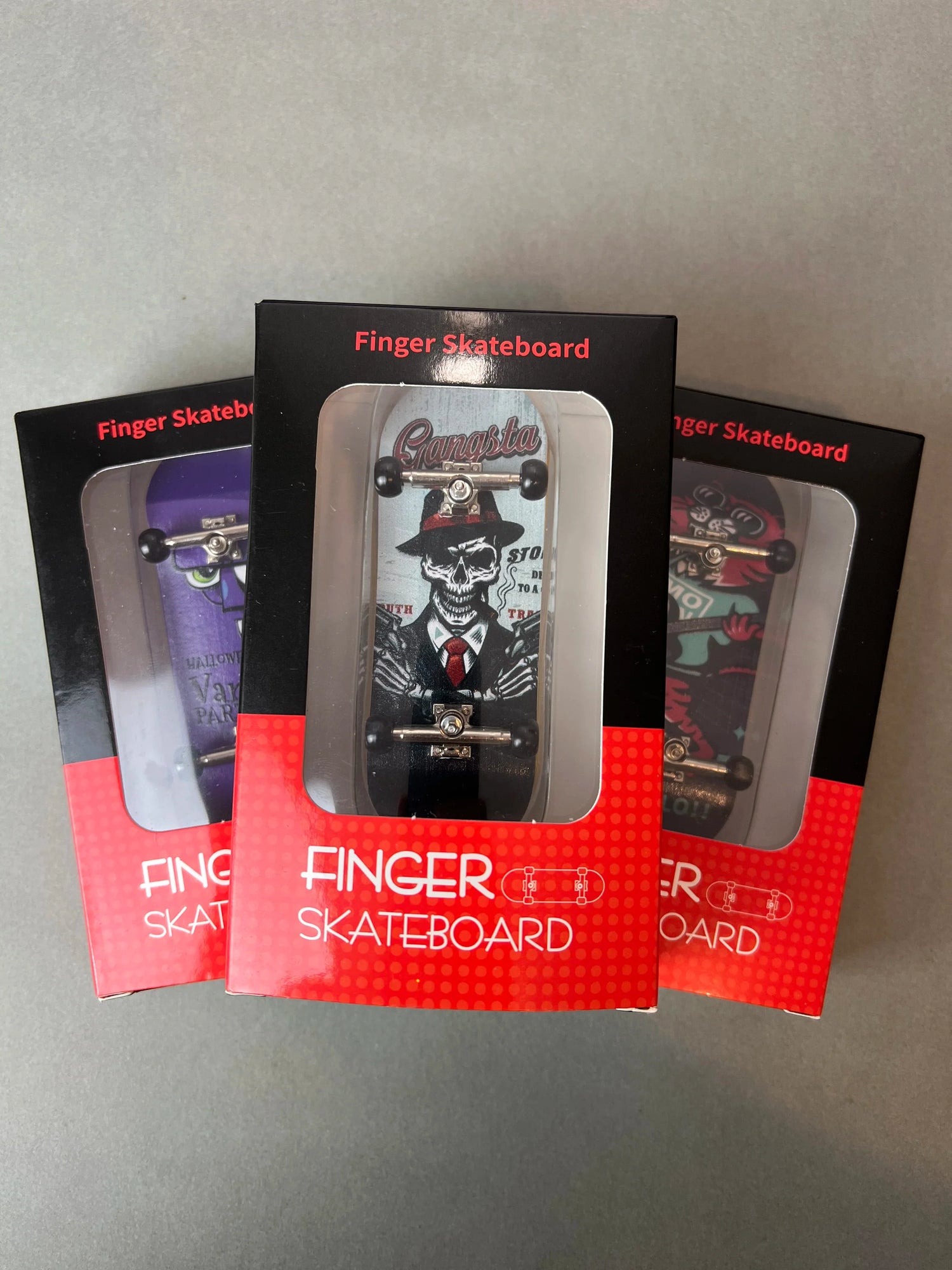

How to Choose Your First Professional Fingerboard: Complete 2026 Guide
You go looking for your first professional fingerboard and run into sizes measured in millimeters, different grip types, adjustable trucks, wheels made from different materials… and no idea where to start. That's normal: nobody explains it before you buy, and most people end up choosing based on whichever design looks best at first glance (which, hey, matters too, but shouldn't be the only thing).
Here's what you actually need to look at before spending your money: size, materials, grip type, and budget, explained without unnecessary jargon and built to help you get it right the first time.

Table of Contents
- What to Look for Before Buying
- Size: 30mm vs 34mm
- Materials: Wood, Trucks, and Wheels
- Grip: Foam vs. Traditional Grit
- Budget: What to Expect
- Common Mistakes
- How to Take Care of It
- FAQ
What to Look for Before Buying a Professional Fingerboard
Before you focus on the graphic (which matters too, we're not going to pretend it doesn't), there are five things that determine whether you'll actually enjoy your fingerboard or end up leaving it in a drawer after two weeks:
- Size: needs to match your fingers and your style.
- Deck material: this determines pop and durability.
- Trucks: if they're not adjustable, control will be limited.
- Wheels: without real bearings, there's no smoothness.
- Grip type: completely changes the feel when doing tricks.
Let's go through each one.
Size: 30mm vs 34mm, Which One Fits You?
The two most common sizes in professional fingerboards are 30mm and 34mm deck width. It's not just a matter of taste — it noticeably changes how the board feels under your fingers.
Based on Your Finger Size
If you have smaller fingers (kids, teens, or smaller hands), a 30mm fingerboard tends to be more manageable: it's easier to control with precision and takes less effort to land your first clean tricks. If you have larger fingers or already have some experience, a 34mm will give you more stability and a feel closer to a real skateboard.
Based on Your Style (Street vs Park)
For precise technical tricks and quick flips (street style), a slightly smaller deck tends to respond better. For ramps, transitions, and longer-range tricks (park style), the 34mm offers more control surface and landing stability. If you're only going to have one fingerboard, the 34mm is the most versatile choice to start with, and it's what we use as the base for our Pro line.


Materials: Wood, Trucks, and Wheels
A good professional fingerboard deck is built from thin layers of pressed maple wood, just like a real skateboard. That's what gives it pop (the snap you need for a clean ollie) and what lets it take repeated hits without chipping in the first week.
The trucks should be metal and adjustable via kingpin and bushings. This is key: a truck you can't tune forces you to ride with whatever turn it came with out of the box, with no room to adapt it to your style. The wheels, in turn, need real mini bearings — not a solid piece of plastic — so they roll smoothly and don't stall out mid-manual.
Grip: Foam vs. Traditional Grit
Grip is the surface your fingers rest on, and there are two schools of thought here:
Traditional grit tape: the classic option, closer to the grip tape on a real skateboard. Gives you a lot of hold, but with heavy use it can wear down your fingertips if you practice for long stretches.
Foam grip: gentler on the skin, keeps good hold, and is more comfortable during long sessions. It's the option that's grown in popularity in recent years among people who fingerboard daily, and it's what we offer in our foam grips for anyone who wants to swap the grip on their current board.
There's no objectively "better" option: if you're going to practice casually, traditional grit works perfectly fine. If you're going to put in real hours, foam is worth it.

Budget: What to Expect by Price Range
| Price Range | What You'll Get |
|---|---|
| Under €15 | Almost always plastic like a Tech Deck, not a real professional fingerboard. Skip it if you want to progress. |
| €20-35 | Entry range for a real professional fingerboard: real wood, adjustable trucks, bearing wheels. This is where our Pro range sits. |
| €40 or more | High-end or individual components from specific brands (trucks, premium wheels) for riders who already have experience and want to customize their setup piece by piece. |
For your first fingerboard, the €20-35 range is the sweet spot between real quality and a reasonable price. Below that, you're almost certainly buying a toy, not a tool to progress with.
Common Mistakes When Buying Your First Fingerboard
- Choosing based only on the graphic, without checking materials or whether the trucks are adjustable.
- Buying the wrong size for your hand, which makes your first tricks far harder than they need to be.
- Not checking if the seller offers a warranty or returns: generic marketplaces often have low-quality knockoffs with no backing.
- Focusing only on the lowest price, without factoring in that a cheap, low-quality fingerboard usually wears out faster and frustrates more.
- Not reading real reviews before buying: they're the best way to know if a product actually delivers.
How to Take Care of It So It Lasts
A well-cared-for professional fingerboard lasts years, not months. Some basic care tips:
- Clean the wheels and bearings occasionally: dust and dirt slow down the roll over time.
- Adjust the trucks if you notice they turn too much or too little; don't be afraid to tune them to your liking.
- Avoid moisture on the wood: store it somewhere dry so the deck doesn't lose its pop.
- Replace the grip once it's heavily worn: losing finger grip is the fastest way to lose precision on tricks.
Frequently Asked Questions
What size fingerboard is best to start with?
For most beginners, 34mm is the most versatile choice: it gives you stability and adapts well to both street and park styles. If you have smaller fingers, 30mm might be more comfortable at first.
Do I need to buy accessories separately at the start?
Not essential. A complete professional fingerboard already comes with deck, trucks, wheels, and grip ready to use. Accessories (extra foam grips, replacement bushings) are useful later on, once you want to customize your setup.
How long does a well-cared-for professional fingerboard last?
With basic care (occasional cleaning and dry storage), a quality professional fingerboard can last several years of regular use, replacing only specific parts like wheels or grip as they wear out.
Can I change the wheels or trucks later on?
Yes, that's one of the advantages over a Tech Deck-type toy: since the parts are standard sizes, you can swap wheels, trucks, or grip individually based on what you want to upgrade, without having to buy a whole new board.
What's the real difference between foam grip and grit tape?
Grit tape gives more hold but wears down your skin more in long sessions; foam is gentler on your fingers and keeps good control. For daily practice, most people end up preferring foam.
The Bottom Line
Choosing your first professional fingerboard shouldn't be a gamble. If you take one thing from this guide, make it this: check size, materials, and adjustable trucks before the graphic, and stay in the €20-35 range to make sure you're buying a real tool, not a toy.
In our Pro fingerboard collection you'll find 34mm models with real wood, adjustable trucks, and in-house designs, plus the 30mm option if you're after something more manageable. And if you're still wondering exactly what sets a professional fingerboard apart from a Tech Deck-type toy, check out this other article before deciding.